Chamomile
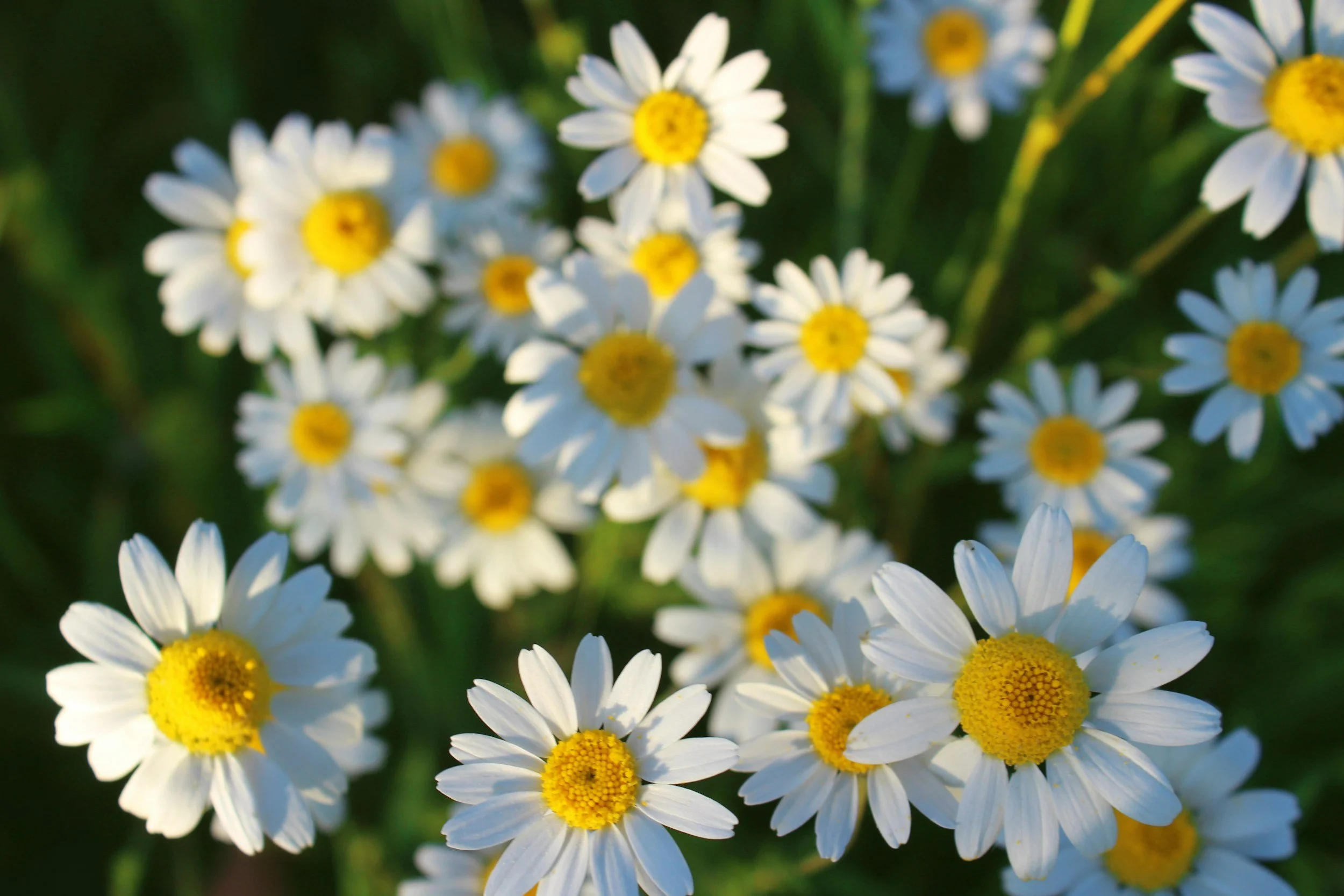
German Chamomile
Planting Information
German chamomile (Matricaria recutita) — an annual that grows quickly and self-seeds, are valued for their fragrant, daisy-like flowers and calming herbal uses.
Site and soil
Light: Full sun to light afternoon shade. In hot regions, some afternoon shade helps prevent bolting and stress.
Soil: Well-draining soil is essential. Chamomile tolerates poor soils but prefers loamy, slightly sandy soil with good drainage.
pH: Prefers neutral to slightly acidic soil (pH 5.6–7.5).
Drainage: Avoid heavy clay or waterlogged sites; amend with compost and grit to improve drainage if needed.
Transplant
Spacing: plant German chamomile: 8 apart.to form a mat. Work compost into soil at planting.
Watering
Moderate water needs. Water when top inch (2–2.5 cm) of soil is dry. Avoid overwatering; plants tolerate some drought once established.
Fertilizing
Low feeders: Chamomile does not require heavy fertilization. Excess nitrogen can produce lush foliage at the expense of flowers and essential oil concentration.
Maintenance and care
Mulch: Light mulch helps retain moisture and suppress weeds but keep mulch away from crown to reduce rot.
Pinching/Pruning: Pinch back young plants to encourage bushier growth and more blooms. Deadhead spent flowers to extend bloom period and prevent excessive self-seeding (especially for German chamomile) if you don’t want volunteers.
Pests/diseases: Generally pest-free. Watch for aphids, powdery mildew, and root rot in poorly drained soil. Improve air circulation and drainage to reduce disease.
German chamomile dies after frost.
Harvesting
Timing: Harvest flowers when they are fully open but before they begin to brown for best flavor and oil content.
Method: Cut flower heads in the morning after dew dries. Harvest regularly during peak bloom to encourage more flowering.
Drying: Spread flowers in a single layer in a warm, dry, ventilated area out of direct sun or use a dehydrator on low heat. Store dried flowers in an airtight container away from light and heat.
Companion planting and uses
Companions: Good near brassicas and onions; chamomile can attract beneficial insects and pollinators. Avoid planting near heavy feeders if soil fertility is low.
Zones
German chamomile: Grows as an annual in most climates; commonly grown from seed regardless of USDA zone.
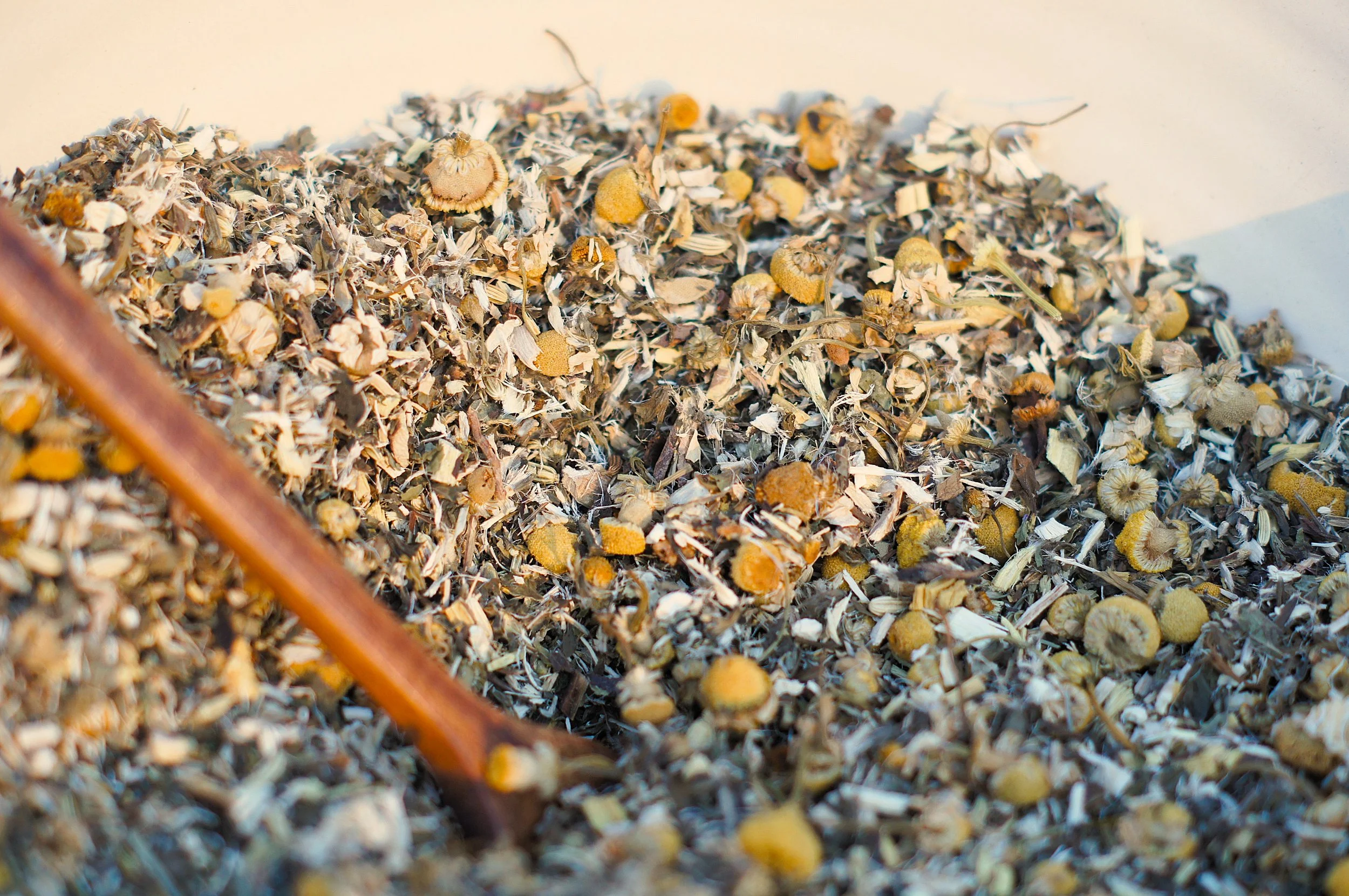
Bellyache Herbal Tea Blend by The Herbalist’s Garden
Chamomile (Matricaria recutita — German chamomile) is a widely used herb in traditional and modern herbalism. Its primary constituents include volatile oils (like chamazulene and bisabolol), flavonoids (apigenin, luteolin), and coumarins. Uses and preparations vary by species and application.
Uses in Herbalism:
Sleep and mild anxiety: Chamomile is frequently used as a gentle sedative. A warm infusion (tea) taken 20–45 minutes before bedtime is a traditional preparation for promoting sleep onset and reducing nighttime restlessness.
Digestive support: Chamomile tea can relieve mild digestive complaints such as bloating, gas, indigestion, and cramping. It is often used after meals or during episodes of upset stomach.
Menstrual cramping: Antispasmodic properties support use for dysmenorrhea. Regular chamomile infusion or a concentrated tincture may reduce cramp intensity.
Topical anti-inflammatory and wound care: Chamomile compresses, creams, or oils are applied to minor skin irritations, sunburn, eczema, and superficial wounds for anti-inflammatory and soothing effects.
Oral health and throat relief: Gargling a cooled chamomile infusion can soothe sore throats, inflamed mouths, or gingivitis; it’s also used as a mild antiseptic rinse.
Infant and pediatric use (cautiously): Dilute chamomile tea is commonly offered for colic, teething discomfort, and mild digestive upset in infants. Use low concentrations, limit frequency, and consult a pediatrician before use.
Forms and preparations
Infusion (tea): Most common. Use 1–2 teaspoons of dried flowers per cup of hot water; steep 5–10 minutes. Longer steeping extracts more constituents but may increase bitterness.
Tincture: Alcohol or glycerin extracts concentrated constituents for small-dose, long-term use. Typical dosing varies with product strength.
Essential oil: Steam-distilled oil for topical use (not internal). Highly concentrated; dilute in a carrier oil (typically 1–3% for adults) before skin application.
Salves and creams: Infused oil or extract incorporated into topical bases for skin conditions.
Compresses and poultices: Strong infusion or concentrated extract applied locally to inflamed areas.
Safety and contraindications
Allergies: Avoid if allergic to Asteraceae/Compositae family plants (ragweed, chrysanthemums, marigolds) due to cross-reactivity risk.
Drug interactions: Chamomile may potentiate sedatives (benzodiazepines, barbiturates) and interact with anticoagulants (warfarin) due to coumarin-like constituents. Monitor with medications that affect CNS or blood clotting.
Pediatric dosing: Use diluted preparations and follow pediatric guidance. Avoid essential oils on infants.
Topical safety: Patch-test before widespread topical use to check for contact dermatitis.
Topical Benefits
Chamomile is widely used in skincare and topical remedies. Its flowers contain compounds such as azulenes, chamazulene, bisabolol, flavonoids (apigenin, quercetin), and essential oils that contribute to anti-inflammatory, antioxidant, antimicrobial, and soothing effects.
Key topical benefits
Anti-inflammatory effects
Chamomile reduces redness, swelling, and irritation. Chamazulene and bisabolol are notable for inhibiting inflammatory mediators, making chamomile useful for sensitive, reactive, and inflamed skin conditions like mild eczema, dermatitis, and post-procedure irritation.Soothing and calming
Chamomile has a gentle calming action on the skin, relieving itching and discomfort. It is commonly used in after-sun products, baby care formulations, and products intended to calm reactive or sensitized skin.Antioxidant activity
Flavonoids such as apigenin and quercetin scavenge free radicals, helping protect skin from oxidative stress and environmental damage. This supports skin barrier health and may help slow visible signs of aging.Antimicrobial properties
Chamomile exhibits mild antibacterial and antifungal activity, which can help reduce surface microbial load and support healing of minor cuts, scrapes, or blemishes. It is not a substitute for targeted antimicrobial treatments in infections.Skin-healing and repair-supporting
Chamomile can promote wound healing and tissue repair by modulating inflammation and supporting collagen formation. It is often included in formulations for minor abrasions, post-treatment care, and scar-minimizing products.Gentle cleansing and conditioning
Chamomile extracts and infusions are used in toners, rinses, and conditioners for their mild, non-drying effects and for imparting a calming aroma.
Practical Tips:
Brew a cup of tea for sleep support and/or digestive support: 1 cup hot water + 1–2 tsp dried flowers. Steep 7 minutes.
Soothing compress: Steep 2–4 tablespoons dried flowers in 2 cups boiling water for 15–20 minutes. Cool to comfortable temperature, strain, soak a cloth, and apply for 10–20 minutes to affected skin.
Use serums and/or creams that have been infused with chamomile to soothe redness, irritation, and reduce inflammation
Chamomile is featured in our:
Sensitive Skin Collection for dry, inflamed and irritated skin conditions
Body Lotion Bars to soothe, nourish & hydrate
Homegrown Hand Salve for skin & cuticle care
Moon Cycles Tea Blend for Woman’s Health
Goodnight Tea Blend for Sleep Support
New Mama Tea Blend for Post-Partum Support
Bellyache Tea Blend for Digestive Support

Calendula & Chamomile grown by The Herbalist's Garden are infused in Sunflower Seed Oil with the addition of Rosehip Oil & Tamanu Oil in this Sensitive Skin face serum. Formulated specifically with eczema and psoriasis in mind, this non-comedogenic serum/moisturizer is suitable for even the most sensitive skin types. Calendula & Chamomile are traditionally used by herbalists for dry skin, eczema, inflammation and to speed tissue healing.
INGREDIENTS: *Calendula & *Chamomile infused Sunflower seed oil, Rosehip oil, Tamanu oil
*The Herbalist’s Garden grown
DIRECTIONS: Apply to clean face/neck morning & night
SKINCARE ROUTINE: For sensitive skin, use Calendula Face Cream in the morning for hydration & protection during the day and Calendula Face Serum at night for lipid repair.

Homegrown Hand Salve features calendula & chamomile infused apricot oil, lavender infused olive oil, beeswax, lavender essential oil. Flowers grown by The Herbalist's Garden are infused in emollient oils to nourish dry skin. This non-greasy formula immediately absorbs, restoring your natural moisture barrier with apricot kernel oil. Calendula, chamomile & lavender soothe inflammation and are suitable for sensitive skin. Olive oil naturally contains squalane which instantly hydrates & locks in moisture. Available in 1oz & 2oz tins
INGREDIENTS: *calendula and *chamomile infused apricot oil, *lavender infused olive oil, beeswax, shea butter, lavender essential oil
*The Herbalist’s Garden grown
DIRECTIONS: Apply topically to hydrate dry, irritated skin including rashes. Useful for cuticle care.